PDF Download
 PubReader
 Export Citation
 Email the Author
 Share Facebook
 Share Twitter
 Cited by 0 Article
 Metrics (View:26)










1. INTRODUCTION
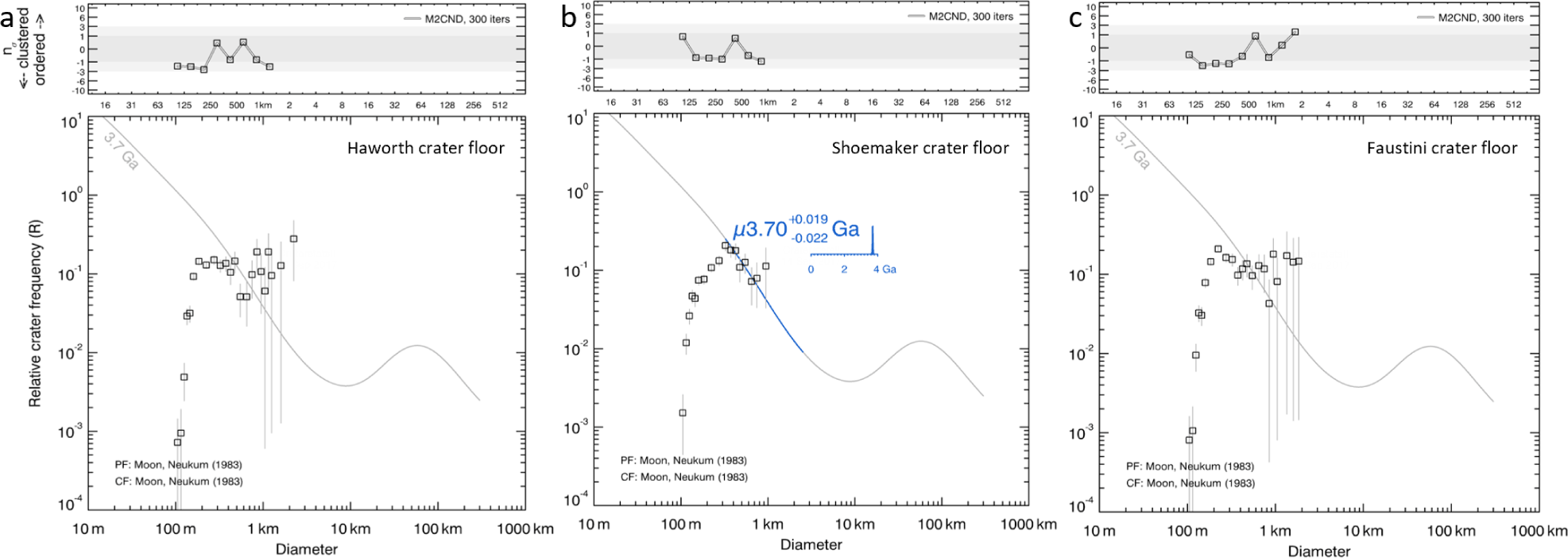
The work presented here extends the results presented in Giuri et al. (2024), in which the authors investigated the model ages and origin(s) of plains and crater-floor materials in the lunar circum-south polar region, finding that smooth deposits formed by ballistic emplacement from multiple basin- and crater-forming events over a period between ~3.8 and ~2.5 Ga ago. They found that crater floor units exhibited distinctive crater-size frequency distributions (CSFDs) associated with a disturbance or partial resurfacing of craters up to around 500 m across the Haworth and Faustini floors, while Shoemaker exhibited complete resurfacing (Fig. 1 after Giuri et al. 2024, Figs. 2(a)–2(c)). The origin of the disturbance or the cause of the partial resurfacing for two rather than all three neighboring craters remained unclear. However, possibilities include (1) resolution limitations of the data set used, (2) an unknown geologic process, or both.
Here, we use CSFD analysis derived from a ShadowCam controlled mosaic to estimate the relative age of Faustini crater and the thickness of basin ejecta material deposited on the Faustini floor from the last three largest basins: Imbrium, Orientale, and Schrödinger.
ShadowCam is a NASA Advanced Exploration Systems (AES) funded instrument onboard KPLO, Korea Pathfinder Lunar Orbiter satellite, aimed at providing insights into polar regions and the distribution and accessibility of surface volatiles including water ice (Robinson et al. 2023; Humm et al. 2023). The design is inherited from Lunar Reconnaissance Orbiter Camera (LROC) Narrow Angle Camera (NAC) (Robinson et al. 2010; Humm et al. 2016; Speyerer et al. 2016) but optimized to image within permanently shadowed regions (PSRs). The modifications provide for an increased integration time enabled with a time delay integration detector (TDI) that allows high average S/N ratio (100) within PSRs (Robinson et al. 2010, 2023). These modifications allow ShadowCam to provide unprecedented high-sensitivity and high-resolution images at 1.7 m/pixel scale from 100 m altitude in line with its science and exploration objectives (Robinson et al. 2023; Humm et al. 2023). PSRs never see direct sunlight. Instead, they receive secondary scattered light reflected off topographic highs (Watson et al. 1961; Shoemaker et al. 1994; Gläser et al. 2018; Thompson et al. 2019; Mahanti et al. 2022; O’Brien & Byrne 2022). This diffuse, indirect illumination creates a complex lighting geometry challenging geologic interpretations (Mahanti et al. 2022; Speyerer et al. 2023). Despite ShadowCam providing high-resolution views into the shadows potentially revealing albedo contrasts for ice detection, regolith properties, terrain roughness, and subtle morphological features undetected with other datasets (i.e., hillshades), the diffuse lighting may alter the appearance of other landforms such as craters introducing significant biases to the crater size-frequency distribution analysis and model age derivation (Sonke et al. 2025; Speyerer et al. 2026). Thus, due to the multiple photometric angles contributing to the illumination within the PSR (Mahanti et al. 2022) careful consideration is required when using ShadowCam datasets for crater measurements. Consequently, a multi-image approach of ShadowCam, LROC NACs and DTMs is necessary to mitigate measurement error and interpret surface geology (Speyerer et al. 2024).
Impact craters are a ubiquitous landform across the Moon. During the final stage of crater formation, material is ballistically ejected along a parabolic trajectory until it hits the surface, forming the ejecta blanket (Melosh 1989). The topography and morphology of ejecta blankets will vary with distance from the impact, the pre-existing surface, and impactor characteristics (Melosh 1989). Large (≥ 300-km-diameter) craters are called basins as defined by Hartmann & Wood (1971). They eject substantial amounts of material that distribute across the Moon, resulting in varying degrees of mixing with local materials (Oberbeck et al. 1974). Modeling the amount and distribution of basin material spread around the Moon is highly dependent on the correct estimation of basin diameters and that of the transient crater – the initial cavity that opens during the excavation stage of crater formation (Croft 1985; Melosh 1989; Cintala & Grieve 1998). Several studies attempted to derive/model how much material is excavated and distributed across the Moon based on terrestrial and lunar craters, on impact scaling laws (McGetchin et al. 1973; Pike 1974, 1977; Housen et al. 1983), and ejecta decay rates (McGetchin et al. 1973; Petro & Pieters 2004, 2006, 2008; Fassett et al. 2011) with variable results. Thus, basin and transient crater diameters, along with the degree of mixing with local materials and other parameters, remain poorly understood (Austin et al. 2024). A comprehensive overview of the different models can be found in the Petro & Pieters (2004) series and their limitations in Austin et al. (2024). Here, we focus on providing a first-degree estimate of the ejecta thickness from the last three basins that was emplaced within Faustini using Pike (1974) model as our case study, while the thickness within Haworth and Shoemaker using the equations of Pike (1974), McGetchin et al. (1973), and Housen et al. (1983) are reported in the Appendix (Table A1 and A2). Other models have been developed that for example measure ejecta mass and velocity distributions via point-source scaling models (Holsapple & Schmidt 1987; Holsapple 1993; Housen & Holsapple 2011) that can be used to estimate ejecta thickness using elliptic ballistic trajectories following Dobrovolskis (1981). However, here we only aim at providing a first-degree estimate of ejecta thickness by using more intuitive equations that, although originally developed for simple and complex craters, serve as benchmarks in ballistic sedimentation models (Xu et al. 2024).
2. DATA AND METHODS
We undertook two studies testing the origin of the Faustini crater floor CSFD disturbance.
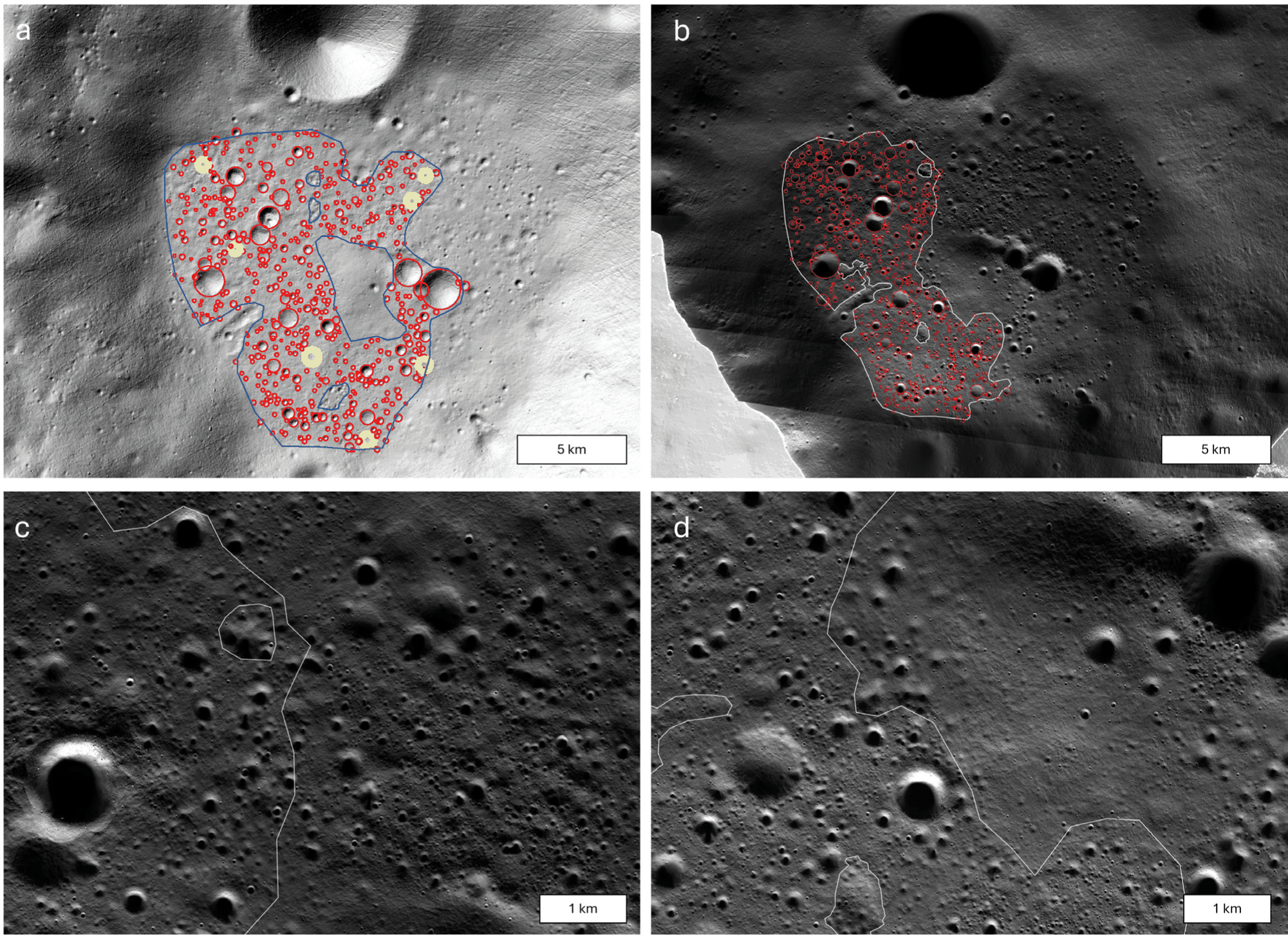
(1) The CSFD in Giuri et al. (2024) was derived from a 20 m/pixel LDEM generated hillshade (Smith et al. 2010). Hillshade datasets are ideal for polar investigations because they remove the effects of shadowing thus facilitating morphologic interpretations. However, hillshades can preclude the identification of subtle surface features that may be included in the count area. Here, we tested the robustness of the crater statistics using a ShadowCam controlled-image mosaic of the Faustini crater floor (Grieser et al. 2025; Collins et al. 2026), allowing for greater accuracy in area selection and, in principle, crater measurements due to the higher spatial resolution (Figs. 2 and 3). The mosaic was generated using multiple overlapping images with consistent illumination geometry acquired on sequential orbits and controlled using similar methods to those used to control LROC NAC mosaics (Klem et al. 2014; Grieser et al. 2024).
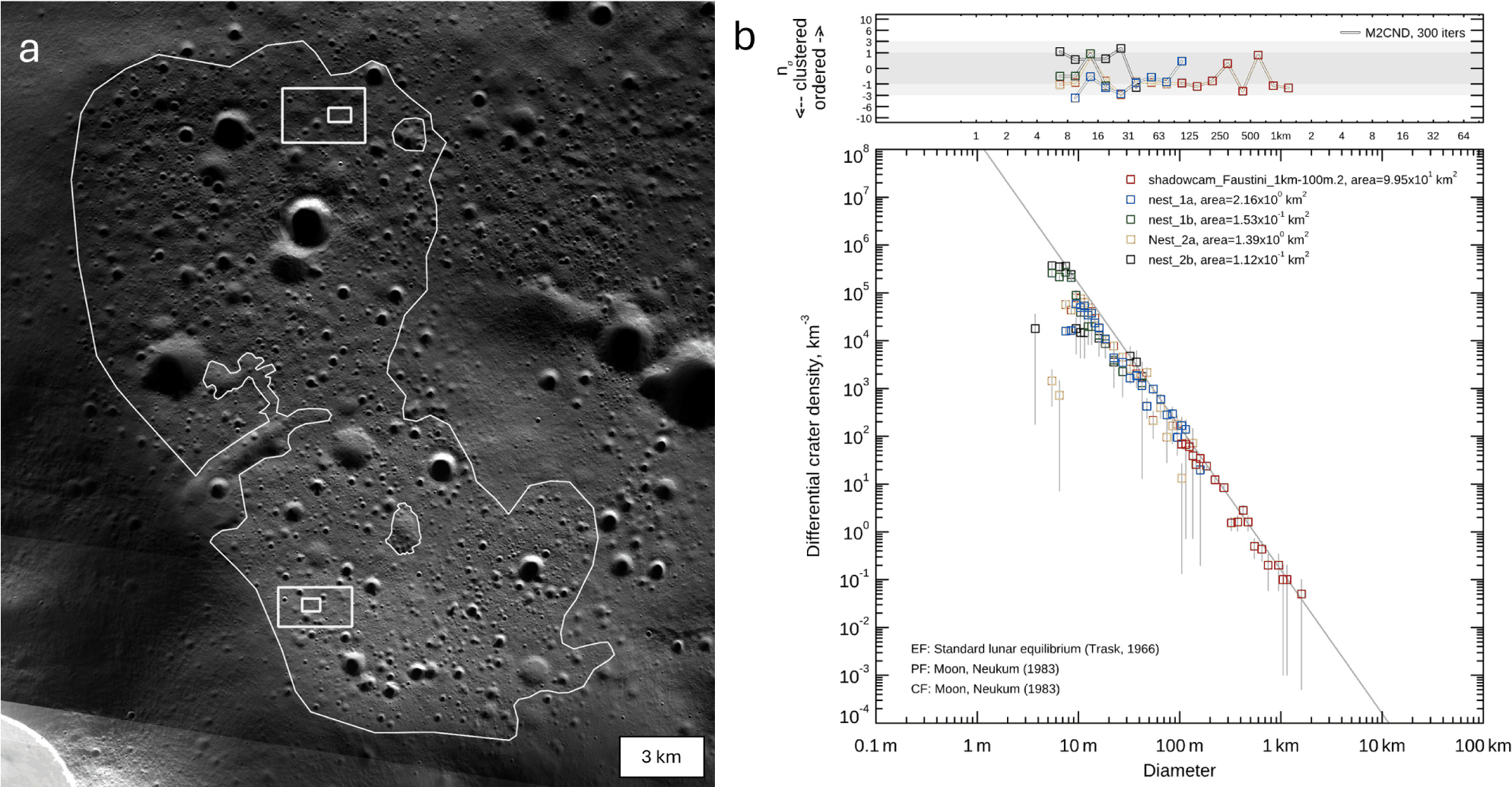
(2) We explore the potential relationship between basin ejecta thickness within Faustini and the origin of the disturbance. By estimating basin ejecta thickness, we aim to (a) constrain how much, if any, material reached the area of interest, and (b) test the inferred 3.7 Ga Orientale age for Haworth, Shoemaker, and Faustini crater floor materials (Giuri et al. 2024). We used the Pike (1974) equation to constrain ejecta thickness. We compared the results using methods presented in McGetchin et al. (1973), and Housen et al. (1983), see the Appendix (Table A2). We adjusted Pike’s equation to account for the curvature of the Moon by substituting the distance (r) with angular distances (α), and we omitted the Oberbeck et al. (1974) local to foreign basin material mixing ratio from our estimates to avoid potential overestimations as well as the need to apply adjustments or permutations to the original equation to account for a specific geological setting (Pieters et al. 1985; Blewett et al. 1995; Petro & Pieters 2004). Finally, we relied on basin diameters from Neumann et al. (2015), who used GRAIL and LOLA data, and transient crater diameters (Mean TC radius) from Wieczorek & Phillips (1999) and Petro & Pieters (2004), who used geophysical data from the Clementine mission as empirical physical evidence rather than using the Melosh (1989) scaling law. The Melosh (1989) scaling law is well established for simple (0.85 factor) and complex craters (0.6 factor), while basins warrant consideration as a separate regime. Basins undergo extensive catastrophic modification such as structural collapse, fracturing, ring formation, and isostatic rebound, which violate the assumptions of ℼ-scaling used in the Melosh model. Thus, using Melosh (1989) scaling law can result in an under- or overestimation of the transient crater diameter. Instead, gravity data allows for an accurate reconstruction of the transient crater diameter and excavation depth as gravity signatures are preserved deep in the crust (Neumann et al. 2015).
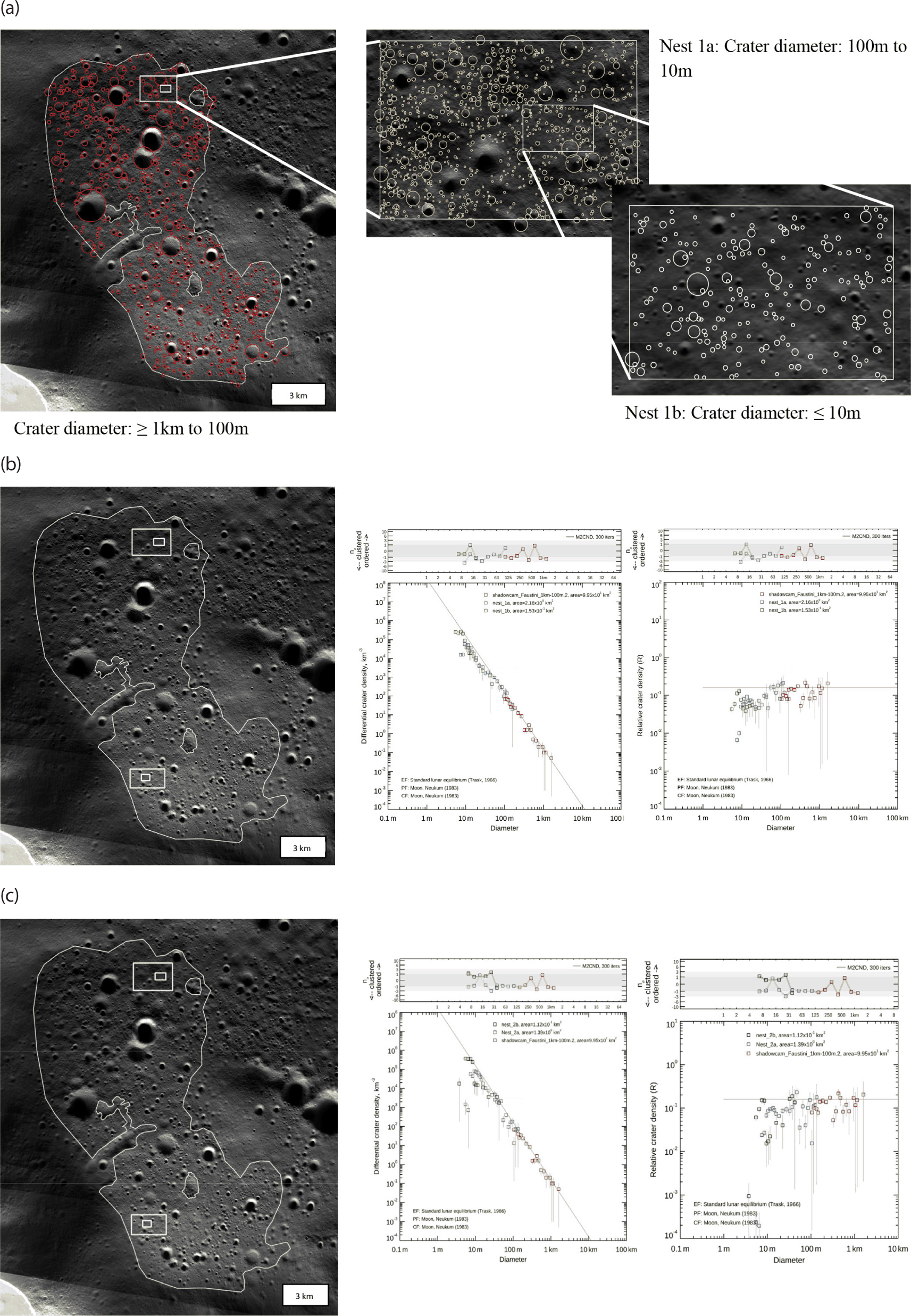
Similar to the work of Giuri et al. (2024), we used QGIS to manually select a homogeneous count area within the Faustini crater floor in ShadowCam mosaic, avoiding large secondary clusters (e.g., Neukum et al. 2001; McEwen & Bierhaus 2006; Hiesinger et al. 2011, 2023). Given the higher resolution of the mosaic compared to the hillshade, our refined count area mostly overlaps with the Lower floor unit as mapped by Williams et al. (2024). To improve crater-counting efficiency, we adopted a nested approach with decreasing crater diameters. Our main count area includes crater diameters ranging from ≥ 1 km to 100 m. Two large nests within the main count areas have crater diameters of ~100 m to ≥ 10 m, and within these two large nests, we selected two smaller nests with remaining craters < 10 m in diameter (Fig. 3(a)). CSFD measurements of primary craters were made using the QGIS plugin OpenCraterTool (Heyer et al. 2023), while fitting, randomness, and Poisson error analysis were conducted in CraterStats (Michael & Neukum 2010; Michael et al. 2016) using the production (PF) and chronology (CF) functions of Neukum (1983).
To estimate the amount of basin materials at a given location, we used the Pike (1974) model in which he revisited the ejecta thickness at the rim from McGetchin’s model to derive the relation:
where t is the thickness of the material, T is the thickness of the ejecta at the rim, r is the distance from the center of a basin or crater to the area of interest – or α in our case, R is the radius of the transient crater for large impacts – or Mean TC radius here, and B is the decay constant of 3.0 ± 0.5 as a standardized best fit value (Melosh 1989; Austin et al. 2024). For both models the equation is the same except for the value of T. While in McGetchin et al. (1973)T is defined as T = 0.14 R(0.74), for Pike (1974)T is defined as:
Here, we use Pike (1974)Eqs. (1) and T value (2) to constrain ejecta thickness (Table 1, A1, and A2).
D refers to basin diameters after Neumann et al. (2015); Mean TC radius is the mean transient crater Radius after Wieczorek & Phillips (1999) and Petro & Pieters (2004); α is the angular distance calculated using the spherical law of cosine, and t is the ejecta thickness.
3. RESULTS
We present a refined, albeit smaller, count area in terms of homogeneity where we were able to identify and exclude different features and surface textures such as Elephant Hide Textures (EHTs) (Fig. 2).
Differently from conventional crater counting methodologies where all visible primary craters are measured within a count area, we divided the main count area into nests with decreasing crater diameters (Figs. 3(a) and A1). We find that the main area and all nests exhibit CSFDs with slopes of –2, indicative of crater equilibrium (Trask 1966) across the entire measured crater diameter range such that absolute model ages (AMAs) could not be fit (Figs. 3(b) and A1), thus supporting Faustini’s old age consistent with the previous finding of Giuri et al. (2024).
Consequently, these results exclude a dataset-related issue and shift the focus of the investigation to an unknown geologic process occurring here. Thus, we examined whether basin ejecta material introduced within Faustini could account for the disturbance by providing a first-degree estimate of Imbrium, Orientale, and Schrödinger ejecta thickness using the Pike (1974) model (Table 1).
We find that the basin contributing the most material within Faustini is Imbrium, with 12 +25–8 m, while the Orientale and Schrödinger basins provided 5 m each. Taken individually, these thicknesses would reset crater populations to ~300 m and 100–200 m, respectively (Pike 1980). In Giuri et al. (2024), the disturbance occurs around craters with a 500-m diameter; thus, to fully bury or degrade all craters up to this diameter while preserving larger craters, a thickness of at least 18 m is required. Considering the limitations in the model (see Discussion section), the thickness of 12 m – from the Imbrium alone, and 18 m may be considered a good approximation within error.
4. DISCUSSION
In this work we estimate ejecta thickness primarily using the Pike (1974) model. Despite the author adjusting for the ejecta thickness at the rim of a basin or crater from McGetchin’s model, leading to slightly higher estimates than both McGetchin et al. (1973) and Housen et al. (1983) – see Appendix (Tables A1 and A2), there are shortcomings with the development of the equation and consequently, with our estimates.
-
Pike (1974) assumed a vertical impact formed the basin or crater under study and that the ejecta was continuous and uniformly distributed which is not a realistic scenario for most large impacts.
-
The equation does not account for the curvature of the Moon.
-
The decay constant and transient crater diameters are estimates or models themselves (Croft 1985; Melosh 1989; Cintala & Grieve 1998; Petro & Pieters 2004; Fassett et al. 2011; Austin et al. 2024).
-
The parameters involved with basin ejecta thickness equations are poorly understood or unknown (Austin et al. 2024), thus rendering uncertainties tied to the model unquantifiable.
In addition, most models were developed for simple and complex craters with ejecta thickness estimates up to a distance of ~1–1.5 crater radii (McGetchin et al. 1973). For basins, complex numerical modeling is necessary to refine ejecta estimates by accounting for the extreme modification basins undergo after the impact, the degree of mixing between basin and local material, impactor and target properties, topographic shielding effects, etc. (Oberbeck et al. 1975).
Thus, questions remain about (a) whether complex crater models can reliably be applied to basin size-impacts, (b) whether distal unevenly distributed ejecta behaves similar to proximal continuous ejecta, (c) estimates of basin and transient crater diameter methods, and (d) the degree of uncertainty tied to all parameters used.
Giuri et al. (2024) found a potential disturbance or partial resurfacing in the crater statistics for Faustini and Haworth surface floor materials which was not observed in Shoemaker crater. CSFD analysis appears to record the time when this disturbance might have occurred around ~3.7 Ga ago in agreement with the Shoemaker surface material age. Consequently, an Orientale-related origin was inferred for all three crater floors given the statistically similar age with the impact event derived in a similar study (Giuri et al. 2026a). However, the ejecta thickness estimates from this work are inconsistent with the observations.
On one hand, Giuri et al. (2024) recorded a lack of 3.8 Ga Schrödinger-related deposits at the pole despite its relative geographic proximity. Instead, they were found to surround the impact, in the direction opposite to the pole, and extending to the nearside which provided support to the interpretation of Schrödinger as an oblique impact after Kring et al. (2025). Here, we find that Schrödinger introduced at least some materials within Faustini (4.5 m) potentially in agreement with an asymmetric ejecta deposition. Notably, Orientale materials are of comparable thickness to Schrödinger (~5 m). However, while the combination of Orientale’s larger diameter but farther distance than Schrödinger to Faustini and its formation as an oblique impact (Guo et al. 2018; Yue et al. 2020), might reflect the modelled thickness, it does not account for the observed crater diameter at which the partial resurfacing occurs requiring a thicker deposit.
On the other hand, we find that the Imbrium contributed most of the materials within Faustini despite its distance and its established 3.92 Ga sample age (Nemchin et al. 2021). This result is in direct contradiction to the measured 3.7 Ga age in the the southern polar region in contrast to Giuri et al. (2026b) where Imbrium-aged materials (3.9–4 Ga) were found exclusively in the northern polar region.
If we consider a hypothetical cumulative ejecta thickness from all three basins within Faustini and Haworth, then a thickness of ~20 m is derived, consistent with the measured CSFD. However, an even thicker deposit would be required to account for the complete resurfacing within Shoemaker.
Thus, if we exclude a multi-basin contribution around 3.7 Ga, it is more likely that such discrepancies are (1) model-dependent, (2) reflect the complex geologic history of the southern polar region hence challenging efforts to identify the source of the disturbance, or both.
Thus, questions remain on the origin of the disturbance measured within Faustini, although alternative scenarios to be explored in future work may include topographic shielding effects, terrain elevation, mixing ratios, basin-induced seismic shaking, and potentially differential subsurface water abundance effects.
5. CONCLUSION
The lunar southern circum-polar region is the primary target for upcoming and future missions due to the presence of potential volatile species essential for exploration and human habitation. This work builds on our previous investigation into the ages and origin(s) of surface materials at the pole to better understand the geologic history of the region (Giuri et al. 2024). Here, we used (1) a ShadowCam mosaic to re-examine in greater detail the crater population within Faustini crater floor, and (2) ejecta thickness models to gain insights into the origin of the partial resurfacing recorded in our previous study. We found that despite the high-resolution of ShadowCam images, we were able to support the ancient age of the impact and that of the surface floor materials as previously derived. However, the ejecta thickness estimates produced contradicting results. We used the Pike (1974) model to estimate the amount of basin ejecta introduced into Faustini crater by the Imbrium, Orientale, and Schrödinger basins. We found that the ejecta estimates for all three basins did not convincingly support empirical evidence. Thus, it is likely that such discrepancies are a combination of model-dependent uncertainties and the complex impact history of the region.